Career changes are becoming very common in today’s job market. Whether due to personal growth, a shift in industry, or exploring new avenues, changing careers can be thrilling yet challenging.
Image Source: https://olibr.com/blog/navigating-career-transitions-tips-for-growth-and-success/
Read on for helpful insights and tips on navigating a career change successfully and ensuring an easy transition into your new professional path.
Understanding The Landscape of Career Changes
Understanding what is happening in the world of career changes in the context of recent trends and shifts in the job market. This understanding, as a precursor to effective strategies for successful career transition, is pretty important.
The Increasing Trends In Remote And Hybrid Work
One of the prominent trends that is shaping career changes through 2024, and is likely to continue in 2025 is the continued expansion of remote and hybrid work options. According to recent data by Robert Half (https://www.roberthalf.com/):
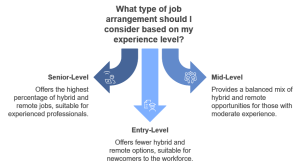
Image Courtesy: https://app.napkin.ai/
- For a senior-level position (5+ years of experience), 29% of new jobs are hybrid, and 17% are fully remote.
- For a mid-level role (3-5 years of experience), 22% are hybrid, 13% are remote.
- Even in entry-level positions (0-2 years of experience), 17% are hybrid, and 10% are remote.
This shift in work flexibility opens career changers to opportunities in places that were once unattainable geographically.
Changing Attitudes Regarding Remote Work
While remote work opportunities still are more common than ever before the pandemic, there is a slight decline in the percentage of job postings that advertise working remotely or in a hybrid model. Indeed reported that as of October 2024, 7.8% of the job postings advertised remote or hybrid work, down from a peak of 10.4% in February 2022.
This trend suggests that while remote work is here to stay, companies have increasingly found a balance between remote work and in-office work, and career changers should be prepared for a range of these work arrangements and be flexible over their expectations.
Industry-Specific Trends
Shares in remote work opportunities vary among different industries. For instance, sectors such as software development, IT, and accounting are among the ones that post the highest shares of remote jobs. However, if one looks closely, you will notice a slight dip in the percentage as compared to the previous year.
These trends allow you to focus your efforts on career changes correctly, concerning which industry or role is better for you as a work setup.
Psychology of Career Change
Changing careers is more than changing jobs. It is life-changing, one that makes an impact on identity, self-esteem, and the overall well-being of an individual. Psychology regarding career change will help facilitate this move for you.
Career Transition Process
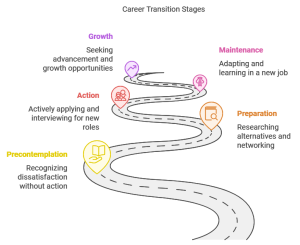
Image Courtesy: https://app.napkin.ai/
- Precontemplation: Now that there is a sense that “Things are not working the way it should be”, but haven’t really done anything as an alternative.
- Preparation: Some research on these possible alternatives, networking or, in some cases, acquiring necessary competencies.
- Action: You cannot just sit there as applications and interviews take hold, along with a possible career or job change.
- Maintenance: Putting it all in use after getting hired by starting to adapt and learn while getting established in a new field.
- Growth: Once you get more comfortable in your new career, you then start seeking ways to advance and grow within it.
Knowing these stages might help you understand where you stand along the line and what you should do next.
Dealing with Uncertainty and Fear
Most changes in careers involve fear and uncertainty. You might consider:
- Fear of failure
- Feelings of being an imposter
- Fear about financial well-being
- Second-guessing your decision
To begin to manage those feelings, you:
- Practice self-compassion and remind yourself of the fact that it’s normal to feel uncertain during these kinds of changes.
- Focus on your strengths and transferable skills.
- Seek support from friends, family, or a career coach.
- Remember your motivations for making the change.
Assessing Your Skills and Interests
One of the most crucial steps when making a career change is taking time to understand your skills, interests, and values. This self-assessment will allow you to narrow down some new possible careers that best fit your skills and passions.
Skills Inventory
- Hard Skills: These are specific, teachable abilities that can be defined and measured. Examples include programming languages, data analysis, and project management methodologies.
- Soft Skills: It is the interpersonal attribute that helps one perform well with others. The skills include communication, leadership, and problem-solving skills.
- Transferable Skills: The skills that can be carried to a number of jobs or industries. Examples are time management, teamwork, and adaptability.
Make a long list of your skills under each category. Do not limit yourself to those you have used in your current job. Consider skills you developed in hobbies, volunteer work, or personal projects.
Exploring Your Interests and Values
Consider:
- What activities energise you?
- What topics are you passionate about learning about?
- What kind of work environment do you thrive in?
- What are your core values, and how do they relate to possible careers?
The Holland Code (RIASEC) test or the Myers-Briggs Type Indicator can provide you with some insights into the career pathway that best gels with your personality and interests.
New Career Options
Now that you have a better idea of what you can do and what you like, it is time to start exploring new career options. This research method is the most crucial step in your decision-making process regarding a career change.
Making Use of Online Resources
- Job Boards: LinkedIn or any niche job board can tell you what kind of positions exist and what kind of experience you may need.
- Career Information Websites: The Occupational Outlook Handbook through the Bureau of Labor Statistics describes thousands of careers in detail and tells you about job tasks, education needed, and future employment.
- Professional Association Websites: They can give information about industry trends, connections and sometimes even job leads.
Informational Interviews
Find and reach out to professionals in fields you’re interested in for informational interviews. These conversations can provide valuable insights into:
- Day-to-day responsibilities of the role
- Skills and qualifications needed
- Industry culture and work environment
- Potential career paths within the field
Remember to treat these interviews as learning experiences, not job interviews. You need to be respectful of their time and ask thoughtful questions.
Exploring Through Volunteering or Side Projects
Volunteer or take on side projects in the new field. It will give you:
- Hands-on experience
- Relevant skills
- Increased network in the new field
Determine if this work aligns with your interests and values.
Bridging the Skills Gap
Once you decide on a career, you would probably discover that there is a gap between your existing skills and the one needed in the new field. The process of closing this gap is an integral part of the career transition.
Skills Gap Identification
- Compare your present skill set with the requirements of your target job.
- Observe the entry-level job description in your desired field.
- Talk to people working in the industry to learn the most valuable skills.
Skills Development Strategies
- Online Courses and Certifications: Websites such as Coursera, edX, and Udemy offer courses on a variety of topics. Most of these courses award certificates after completion. These can add immense value to your resume.
- Bootcamps: Short-term, intense training programs help build skills in areas like coding, data science, or digital marketing.
- Professional Development Workshops: Many professional associations have workshops and seminars that help the members to acquire new skills.
- Formal Education: In some cases, you might want to acquire a degree or even certifications based on the change of career.
- On-the-Job Training: Many employers offer training programs to career changers. Try entry-level positions or internships that can provide on-the-job training.
Utilising Transferable Skills
While developing new skills, don’t underestimate the value of your transferable skills. These are skills you’ve developed in your current career that can be applied to your new field. Common transferable skills include:
- Communication
- Problem-solving
- Project Management
- Leadership
- Adaptability
Remember to highlight the above skills in your resume and interviews to show how your past experience is relevant to your new career path.
Networking for Career Change
Networking is an effective tool for career changers. It helps you know your opportunities, gain insights into your new field, and possibly land your next job.
Building Your Network
- Use LinkedIn: Update your profile with career change goals. Join the groups relevant to your target industry and engage with the content in your target industry.
- Attend Industry Events: Conferences, meetups, or webinars in your new field.
- Alumni Networks: If you are an alumni of a college or university, try to tap into their services and network.
- Professional Associations: Join associations that align with your target career. Several offer networking events and resources through membership.
Informational Interviews
As I mentioned earlier, informational interviews may be beneficial. How to network:
- Clearly state your purpose and why you want to learn these things.
- Prepare thoughtful questions about the person’s career course and industry.
- Wrap it up with a thank-you note, and stay in touch.
Leveraging Social Media
Use social media platforms to:
- Follow thought leaders and companies in your target industry.
- Engage with content by commenting and sharing insights.
- Share your content related to your new field to establish yourself as a knowledgeable professional.
Crafting Your Career Change Narrative
As you prepare to apply for jobs in your new field, you need to have a distinguished career change story. It means you need to connect your past experiences to why you are changing careers and your vision for the future.
Elements of a Good Career Change Story
- Reason: Clearly articulate why you’re making this change. What attracted you to this new field?
- Transferable Skills: Demonstrate how your past experiences have equipped you to meet the change.
- New Skills and Knowledge: List the classes taken, courses, any type of certification, or project relevant to the new career.
- Vision for the Future: Share your enthusiasm toward the new direction and long-term vision for this career change.
Resume Tailoring
You’ll talk about the change based on your new career in the following lines to be added to your resume.
- Functional or combination resume format to show the most relevant skills and experiences.
- Strong summary statement on why you are changing careers and what you bring to the table.
- Transferable skills, as well as new ones acquired.
- Volunteer work, side projects, or coursework that is relevant.
Writing Your Cover Letter
It is your chance to share your career change story with a reader:
- Share a compelling narrative about your interest in the new field and specific role.
- Describe how your unique background adds value to the position.
- Include specific examples of how you have prepared for this career change.
- Demonstrate interest and commitment to your new career path.
Job Search and Interview Process
Job hunting and interviewing can be particularly challenging when one is a career changer. Here are some tips to make the job search process work for you:
Job Search Strategies
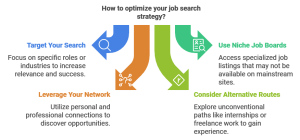
Image Courtesy: https://app.napkin.ai/
- Target Your Search: Focus on companies and roles that are open to career changers or have a history of hiring from diverse backgrounds.
- Use Niche Job Boards: Look for job boards specific to your new industry or that cater to career changers.
- Leverage Your Network: Many jobs are filled through networking. Let your contacts know you’re looking for opportunities in your new field.
- Consider Alternative Routes: Look for internships, contract work, or volunteer opportunities that could lead to full-time positions.
Preparing for Interviews
- Anticipate Questions About Your Career Change: Be prepared to explain your motivation for changing careers and how your background is relevant.
- Research the Company and Role: Show that you’ve done your homework and understand the industry and specific challenges of the role.
- Prepare Examples: Be prepared with specific examples that show your transferable skills and any relevant experience in your new field.
- Ask Thoughtful Questions: Use the interview as an opportunity to learn more about the role and company culture.
Overcoming Common Concerns
Be prepared to address common concerns that employers may have about career changers:
- Commitment: Talk about your passion for the new field and your long-term career goals.
- Learning Curve: Show your ability to learn fast and any steps taken in preparation for the change.
- Salary Expectations: Be realistic about potential salary changes, especially if it’s an entry-level job in a new field.
Managing the Transition
The actual work of transitioning does not end with the securing of a position in your new field. The first few months on the job are the most critical to establishing yourself and laying the groundwork for success.
The First 90 Days
- Establish Clear Objectives: Work with your manager to establish clear goals for your first three months.
- Learn the Culture: Understand the company culture and how things get done in your new workplace.
- Build Relationships: You should build cordial relationships with your colleagues and manager.
- Request Feedback: Periodically, you should request feedback from your manager on your performance and areas that need improvement.
Continuing Education
You will learn even after commencing a new job. Continue doing the following:
- Be updated on current developments and trends in your industry.
- Seize every opportunity to acquire new skills and knowledge in your field of specialisation.
- Learn more about professional associations and attend conferences organised by your industry.
Handling Stress and Uncertainty
A career change can be very stressful. To deal with this,
- Maintain a network of support from friends, family, or a mentor.
- Keep yourself healthy and balanced with self-care at work.
- Celebrate the small victories and achievements in your new career.
Career Management Over Time
Once you are settled in your new career, it is time to start thinking about long-term career management. This includes:
- Self-Review: Occasionally, check your feelings about your new job and set a career vision.
- Learning: Upgrading knowledge/skills as necessary, taking into consideration the advancement trends in the field in order to keep up-to-date.
- Professional Network Upgradation: Maintaining your professional networks even when not actively looking.
- Career Planning: Setting of specific long-term objectives for one’s career and updating them accordingly by reviewing.
Conclusion: Transitioning to a New Career
The whole journey, after all, is quite bold, persistent, and flexible. Sure, it is challenging, but it can be an open window to personal growth, greater job satisfaction, and an opportunity to have your career work in conjunction with your passions and values.
Remember that career changes are becoming increasingly commonplace and accepted in the dynamic nature of the modern job market. Most of the skills you have gained in your current career, coupled with the new ones you would earn during the transition, make you a rare gem to potential employers in the new career.
Be patient with yourself, open to learning opportunities, and not afraid to seek help when needed as you embark on this journey. With careful planning, dedication, and a positive attitude, you can start navigating your career change successfully and find fulfillment in your new professional path.
It’s not just getting out of the situation; it is finding a more fulfilling and better career direction. So, just accept the whole process, learn from it, and look forward to all the opportunities waiting ahead in this new career field.