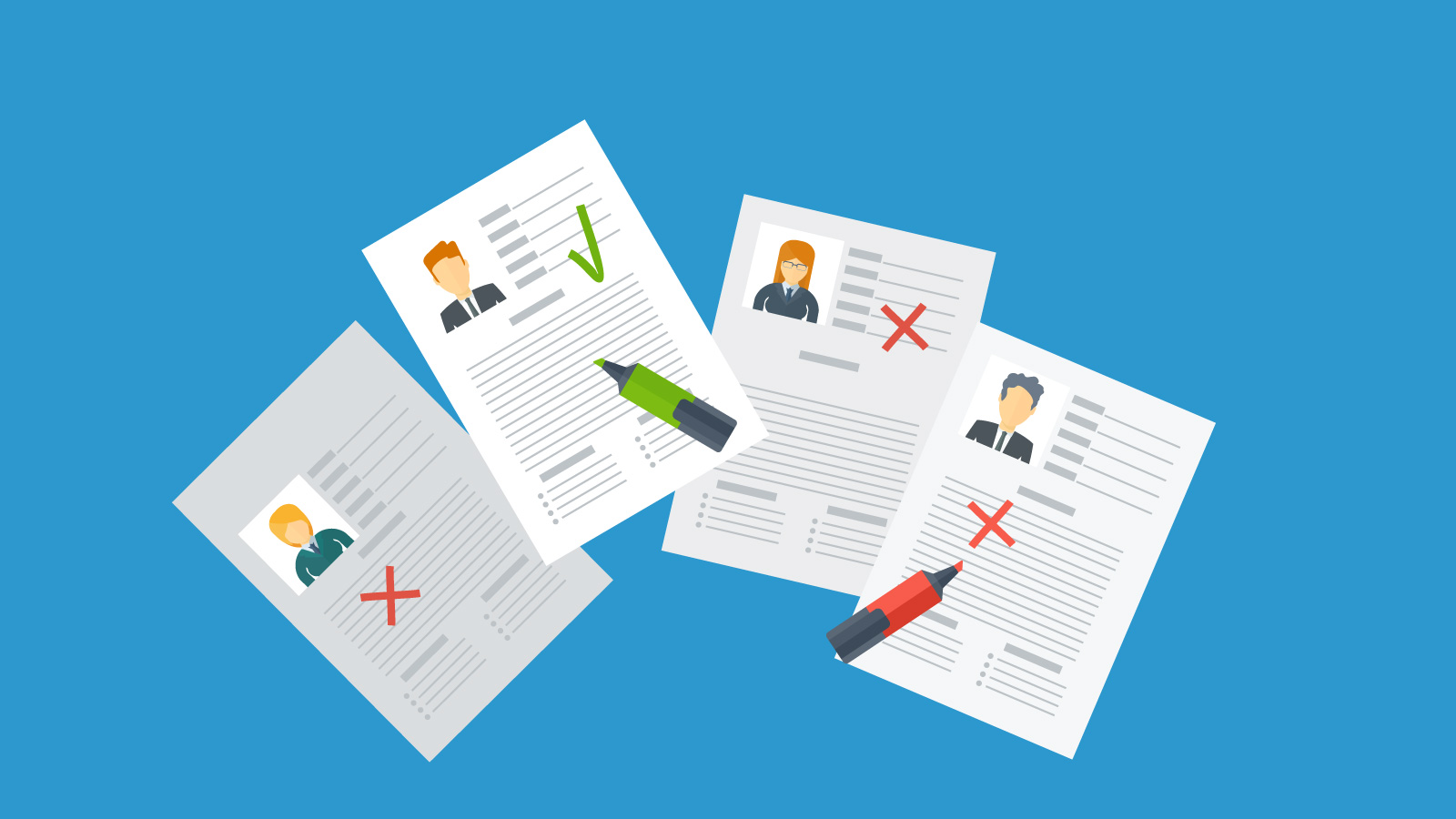
As a job seeker, we often submit our resumes first and cover letters on necessity. However, submitting a resume and cover letter could be the final step for some people. Resumes play a role as a first impression of the candidate, and based on that, the hiring managers shortlist the candidates. The process is time-consuming, and the resumes are not at all flawless. CV mistakes can make the situation more rigid for the recruiters; sometimes, th CVs even get rejected even after having relevant experience.
Resume writing is an art, and job hunting is the main purpose. To avoid being victimized, you must set a goal where your resume will get you the ‘Interview Call’. In this article, we have discussed how to write a good CV with common CV errors.
A good CV must take 15 to 20 seconds to read, though it is unfair as you have invested hours, but here we must consider the recruiter’s perspectives. So, the main focus is on how to craft a perfect professional resume based on employment status. Here are the resume mistakes to avoid:
-
Wrong Spelling and Grammar
If you overlook the spelling errors and typos, your CV will give you a huge disappointment. Bad grammar, spelling mistakes, and typo errors reflect your personality even before you appear in front of the recruiter. These CV mistakes might portray you as a terrible communicator, irresponsible, or uninterested in the job role.
These are some basic rules and tips for grammar to follow while writing your CV:
- Use writing tools like Grammarly to prevent spelling and grammar errors.
- Use apostrophes when displaying ownership of something, e.g., the Organization’s content, the client’s requirements, etc.
- Use quotation marks if you are using references.
- Add your experiences and achievements from past job profiles.
2. Inferior Formatting
It takes maximum 6 to 8 minuites for a recruiter to check a CV to understant the potentiality of the candidate. If they are not satisfied with the evaluation, they simply skip it over and move to the next candidate.
So, formatting your CV correctly will let the recruiter find the information they’re looking for quickly and efficiently. As a general suggestion, you may follow these instructions:
- Use bulleted points instead of paragraphs.
- Select a specific theme of colour and font, and stick to the same throughout the entire Resume.
- Do not forget to utilize white space to divide the sections in your CV to make it neat and sophisticated.
- To avoid CV mistakes, follow a template instead of building a CV without any prior experience. This will save a lot of time.
3. Crafting A Long CV
When you have many achievements and want to tell each of them through your CV, you are making a wrong decision. Your thoughts might be tempted to write down your experiences and achievements, but here is some advice that you should don’t:
- Write your life story in your CV.
- Rather, craft a brief and concise document for the position you’re applying for. You may aim for a maximum of 2 pages.
- Only highlight the relevant projects and experiences to the role you’re applying for.
4. Not Tailoring CV According To The Position
A CV isn’t assumed to be One-size, which will fit all positions. For example, if you are working as an engineer and trying to shift your career into a project manager, you need to craft your CV according to the required skills.
It may take a little time and energy, but moulding your CV to match the requirements and eligibility criteria makes you stand out. Moreover, it grabs the attention of the recruiters and shows them that you are generally interested in the position and not just to reach out to them.
On that matter, let’s check out some tips on avoiding CV mistakes and crafting an error-free resume for a position:
- Investigate the enterprise and the job to discover what their perfect candidate looks like.
- Carefully read the provided job description to emphasize the responsibilities, skills, and experiences they mark as important.
- When composing your CV, confirm that it protects all these important skills & adventures that were mentioned in the job definition.
- Don’t mention all of your abilities & work backgrounds. Rather, consider those that are suitable for the role you’re applying for.
5. Including Connections
Many candidates believe that adding contacts to a CV creates a transparent and reliable profile.
However, this is a wrong idea. A CV reflects only the start of the job application process, and references are usually requested further down the recruitment. So, in a CV, there are no major roles for references, it is just like a list of names.
6. Not mentioning Hobbies & Interests
Although this is not like the other CV mistakes, people skip this area.
Ny adding your hobbies and interests, you can actually help yourself to stand out from others. Let’s see how:
- To establish a good rapport with the hiring manager, you can show them your personality apart from your work.
- Who knows, both of your interests match and have some common talk.
- Besides, if your hobbies and interests align with the position that you are applying for, they may show that you’re truly passionate about the job.
For example, if you’re looking position for the role of a creative writer, including Dungeons & Dragons as a hobby might support you stand out.
As such, while maintaining a hobbies and interests area won’t get you employed on its own, it can be a useful addition while avoiding CV mistakes.
7. Not Concentrating on Your Accomplishments
Your working experience is the centre of your CV. It is the showstopper of your interview process. It will show the recruiter that you are a qualified candidate and a good fit for the job.
8. Using Cliches (Without Backing Them Up)
CV cliches are overused terms or phrases that mejor people include in their CVs. They make you appearance unoriginal, unethical and reduce your chances even after having an excellent interview preparation.
There are most common and popular words and phrases which contain words such as passion, fast learner, communication skills, attention to detail, creativity, and more.
Moreover, these word are used by too many job-seekers and to be honest, they may not are the same person that they are trying to showcase.
When checking such abilities in your CV, you like to support them with experiences. You can try with something from your work experience section instead of just writing “Communication” as part of your skills.
9. Not Maintaining Digits
Do you really like to make your CV stand out from others? The trick is to enter numbers and data. For Example, enhanced sales by 40% over an 8-month duration by executing new marketing strategies. If you includeonly the text, it would seem generic and the hiring manager will not have any idea about the impact and effort was there.
This example shows what exactly you have done, and how effective your impact was.
So, for any type of knowledge or accomplishment that you add in your CV, always explain:
- What sort of influences did you achieve? Demonstrate in numbers if possible, e.g: annual sales are increased by 35%.
- What are the strategies behind these results? Mention the primary actions you have taken, e.g., adding a new client or a marketing channel and enhancing customer service reaction.
- When did you reach the outcomes? Add the time period, e.g, for the year 2023.
10. Utilizing the Improper CV Template
There are different CV templates that represents different job profiles. Some are visually attractive, easy to evaluation and unique from a pile of other applications.
While the other CV templates have excessive and distracting graphics, amateur fonts, lack of texture, and so on. It appears like a nightmare to go through. So, search for templates that:
- Have precise section titles and headings.
- Contains an easy-to-read font, such as Arial, Ubuntu, Roboto, Overpass, etc.
- Are helpful to look at. Look for templates with bullet points, a pop of colour, a compatible design, and white space around the margins.
- Unique. Black and white colours for CVs are replaced with colour schemes. Add something that grabs the recruiter’s attention.
11. Not Adding Social Media Links
Most people of these generations have accounts in social media, and 60% of recruiters inspect your social media during the hiring process.
So, adding the link of your social media is important. However, first, you need to check those posts that you do not want to show you and delete them, or you can put your profile in private. You certainly do not want your posts or pictures on Facebook to be a frat party at your institute.
After that, edit your profile on LinkedIn or Facebook to look professional. Then, edit the profile you want to show, such as LinkedIn or Facebook, so that they feel a professional development and holds all of the information that does not fit in the CV.
12. Placing the Inaccessible Contact
Imagine spending hours to identify CV mistakes and crafting it for a particular role but did not get any response. You may wondering sitting there there are no vaccancy right now. But in reality, the recruiters fail to reach outto your due to the wrong information of contacts in CV.
Yes! It really sounds like a nightmare.
Check for twice after the final brushing of a CV to avoid this kind of catastrophe.
In addition, in the section of your contact information, make sure to include:
- Your full name, First and last
- Your contact number
- Your Email address
- Your Location
13. Exaggerating the Truth
Embellishing the truth may make your CV stand out, but that is all it can do for you.
You may reach the interview process, but the recruiters will perform a background check, and this exaggeration may catch their attention. It does not take much time for them to check your background by calling your previous manager. You may end up in a disaster if you have a terrible relationship with the previous ones.
14. Missing Employment Gaps
There is no harm in having an employment gap, but it becomes an issue if you do not have a proper explanation.
Recruiters may develop an imagination about you and as a result, it may cause a negative impact. Most of the time, not having a proper explanation always leads them to assume the worst.
So it is important to explain the situation when you are taking a break in between your work experience.