
Can I Be Self-Employed But Working for One Company at the Same Time? A Perspective on the UK and the US
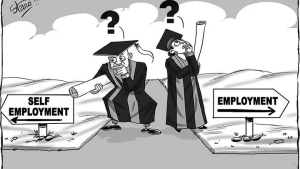
Source- Medium
Can I work for two companies at once? This is one of those concerns that occurs to one in every three people. With the evolution in the workplace, many people are discovering distinctive ways to earn more for a better living. Most of the working employees come up with a common question: ‘Can I have self-employment while still working in a company?’ However, the answer is not clear. It can be an involvement of legal or financial considerations, particularly when we compare two different jurisdictions, like the United States (US) and the United Kingdom (UK). Here, we will find the possible answers to one question: ‘Can I work for self-employment and in a company at once?’ What are the legalities there, and what are the possible advantages and challenges in both the UK and the US?
What Is Self-Employment?
A typical response defines Self-employment or a part-time job as the owner of your own business. Here you can run your business by finding clients, operating finance management, and paying taxes. You will be the boss and only you can choose the flexibility of when, where, and how you will work. On the contrary, an employee works for an employer who owns the company, pays salary on a regular basis, and pays tax and social security contributions.
However, at some point in time, the bar between working for a company and being self-employed can be obscure. Specifically, it happens when you are serving for one company exclusively. This structure is often referred to as ‘dependent self-employment’ or ‘quasi-employment’, and this may exist in both the UK and the US however, regulations may vary in each country.
Self-Employment And Employee Benefits: The Perspective Of The United Kingdom
Legal Framework
In the UK, the legal category of employees is separated into three major categories: ’employees’, ‘workers’, and ‘self-employed individuals’.
- The word, ‘Employees’ defines a particular community who have an agreement of employment and are qualified to diverse employment rights. Whether it is holiday pay, statutory sick pay, or protection against unfair expulsions, employees have rights.
- Workers, on the other hand, are referred to as having some primary employment rights, such as the lowest wages and paid leaves. However, their job security is lower than that of their employees.
- Finally, Self-employed individuals operate their own company, invoice customers, and do not come under any of those rights as employees or workers do.
When an individual runs his or her own business but works primarily or full-time job for one company, it is vital to ensure that the working association is not suitable within the range of ‘disguised employment.’ This phrase categorized an individual as self-employed for tax objectives but, functions like an employee.
IR35 and Its Importance
The IR35 decree is important for people who are running their own businesses and work for a particular company in the UK. It was presented to combat tax release by “disguised employees,” or those who operate via their own limited business. However, it would otherwise be deemed employees if the arbitrator was not used. If an agreement comes within the range of IR35, the person will have to spend income tax and National Insurance Contributions (NICs) equal to what an employee would expend.
Benefits And Challenges Of Self-Employment And Full-Time Worker
Benefits
Flexibility: You are free to bargain your terms of a part-time job and agree with other projects if needed.
Taxation Efficiency: If your agreement is outside IR35, you can efficiently manage your tax affairs.
Freedom: You will have power over your work atmosphere and methods.
Challenges
Limitation: Being a self-employed person, you may not have similar employment rights, for example sick leave.
Economic Uncertainty: No secured income or benefits.
IR35 Submission: You must confirm your agreement details that they do not violate IR35 rules, which may cause higher tax liabilities.
The Perspective for the United States of America
In the US, the differentiation between a self-employed and an employee is also important. According to the US Department of Labor (DOL) and the Internal Revenue Service (IRS), there are several guidelines to help in categorizing workers. The IRS takes a trial that evaluates three main categories:
- Behavioral Management: Does the company have the authority or the privilege to manage what the worker does and how they conduct their tasks?
- Financial Control: Whether the business elements of the worker’s career are governed by the company or not. For example, the process of paying the workers, whether costs are returned, who supplies tools/supplies, etc, comes under the financial aspects.
- Type of Association: Are there documented contracts or employee-type advantages like pension schemes, insurance, and vacation pay? Will the relationship resume, and even is the work performed a fundamental aspect of the company?
A worker is running his or her business, but providing services, especially to one company, is required to confirm that he or she is organized correctly to avoid legal and tax affairs. Misclassification may be caused by penalties and taxes.
Benefits
Higher Earning Possibility: Self-dependent contractors often make more in every hour than employees because they are not permitted to have the same advantages.
Flexibility: Moreover, freedom or flexibility is the greatest advantage when planning your schedule and taking on multiple clients.
Tax Assumptions: Business costs can be removed, which may decrease taxable revenue.
Challenges
No Benefits: There is no access to employer-sponsored advantages like health insurance or retirement schemes.
Tax Obligations: However, they need to pay self-employment tax, which shields Medicare and Social Security.
Legal Suspense: Chance of being categorized incorrectly and meeting liabilities.
Comparing the Policies: The UK and US
The UK and the US both have strategies in place to differentiate between full-time jobs and self-employment. However, the measures and enforcement vary wildly. In the UK, the focus is on IR35 and hidden employment tests. In the US, the emphasis is on the controls over relationships, finance, and behaviour.
Tax Implications: Both nations have tax substances for self-employed people. Wrong categorization may lead to substantial back tariffs and fines.
Flexibility vs. Security: The advantages of flexibility and freedom come with an exchange for the protection and benefits given to employees.
Legal security: According to our survey, self-employed people from both of the countries lack multiple protection advantages afforded to employees, such as sick wages, lowest wage, and unemployment schemes.
Conclusion
While it is likely to be self-employed and work for one company continuously in both the UK and the US, it arrives with intricacies that need thorough navigation. Understanding the law, tax, and financial importance is essential in making an instructed decision. With the proper strategy, you can also take advantage of flexibility and autonomy while lowering the dangers and ensuring compliance with the relevant regulations in your country. But before making any decision, you should always hire a consultant to discuss legal or financial matters for your specific situation.