Today’s competitive job market calls for doing something different and uniquely presenting your attributes.
While technical skills are necessary, soft skills have become as relevant in helping people succeed in their careers. Personality traits and interpersonal skills describe the way you work and deal with others.
Incorporating top soft skills into your CV not only makes it shine but also shows you have the potential for career growth, as you can adapt to situations, collaborate effectively, and lead.
Now, let’s look at the most important soft skills that will make a CV stand out in the applicant pool.
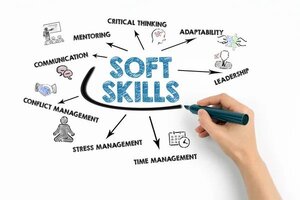
Image Source: https://huntzen.co/pt/blog/recursos-humanos/7-essential-soft-skills-in-the-age-of-the-ai
Communication Skills
Communication skills are very important to success at work. Why is effective communication so crucial? How can you demonstrate this on your CV as well?
Importance of Effective Communication
Effective communication is the base of understanding and cooperation in any environment. It is, therefore, the bridge that connects people, ideas, and solutions.
In the workplace, this skill fosters the clarity of relationships, builds teamwork, and enhances positive workplace relationships. Imagine trying to complete a project without the power to clearly express your ideas and understand the perspectives of people around you—things can fall apart pretty quickly then.
For example, when communicating appropriately, misunderstandings and conflicts are minimized. When employees are understood and heard, they perform much better. It’s for this reason that organizations that communicate effectively record good job satisfaction rates and experience fewer turnovers.
Whether presenting to lead a meeting or responding to an email, the way you express your ideas makes all the difference.
Examples of Communication Skills in the Workplace
Communication skills encompass a wide range of verbal, non-verbal, written, and listening abilities. Some common examples include:
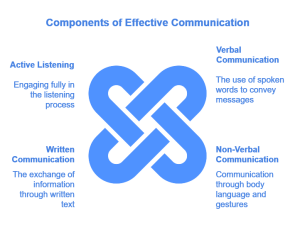
Image Courtesy: https://app.napkin.ai/
- Verbal Communication: The ability to present ideas clearly and confidently, whether in one-on-one conversations or group presentations.
- Non-Verbal Communication: Using body language, facial expressions, and eye contact to reinforce your message and engage others.
- Written Communication: Writing explicit, concise, and error-free emails, reports, and memos.
- Active Listening: Actually listening to others, asking for clarification, and giving feedback that shows your understanding.
Those who can demonstrate success in these areas will shine as a valuable team player who can push a project forward through clarity and mutual understanding.
How to Highlight Communication Skills on Your CV
As long as it is specific, giving the impression through the evidence of such skills shown on the CV, it is enough.
Here are a few tips:
- Use Action Verbs: Write opening words to descriptions with more powerful verbs such as “presented,” “negotiated,” “facilitated,” and “resolved.”
- Examples: Indicate instances of effective communication by giving bullet points, like, “Convened weekly team meetings to address concerns and move forward on the project.”
- Success Quantified: Measure your successes in numbers wherever possible, such as “Increased departmental communication effectiveness by 30 percent by implementing a new report structure.”
By clearly articulating your communication strengths and achievements, you’ll capture the interest of hiring managers who seek employees equipped with these essential skills.
Teamwork and Collaboration
Teamwork and collaboration in the modern workplace have never been more important. It is more than just working together. It’s about harnessing each individual’s unique strengths toward common goals.
Advantages of Teamwork in the Workplace
Successful teamwork and collaboration are what change a workplace. They boost productivity as well as innovation and produce a feeling of camaraderie and shared responsibility.
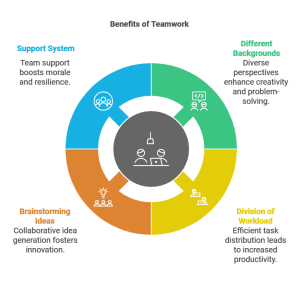
Image Courtesy: https://app.napkin.ai/
- Different Backgrounds: The approach brings people from a variety of backgrounds, thereby expanding the diversity of ideas or possible solutions.
- Division of Workload: Teams can carry out complicated projects which a single person may not be able to handle; it saves people from a lot of tension and pressure while hastening performance.
- Brainstorming Ideas: Creativity improves upon brainstorming sessions as teams develop other members’ ideas.
- Support System: Coworkers provide emotional and professional support, making work more fun and less lonely.
Such scenarios support individual and organizational learning. There results improved morale and a sturdier business.
Working Together: Collaboration Skills Demonstration
Collaboration goes beyond the readiness of people to work with other folks; it involves engaging people in action, being able to embrace flexibility, and making suitable relations that are respectful but also effective.
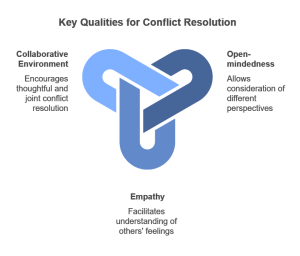
Image Courtesy: https://app.napkin.ai/
Some actions associated with excellent collaborative skills:
- Being Open-Mindedness: Receptiveness about what others may think or suggest is in good order.
- Conflict Resolution: Resolve disagreements professionally and fairly.
- Reliability: Always meeting deadlines and delivering your portion of a team project on time.
- Empathy: Listening to colleagues’ viewpoints and emotions when discussing the topic.
These skills help you positively contribute to team dynamics and help drive group projects forward.
Adding Teamwork Experience to Your Resume
Mention the ability to work well with others, and it sets you apart. This is how you can place teamwork experience on your resume:
- Team projects to the fore: Place your experiences where you worked in teams. It means listing experiences where you participated as part of a team describing your contribution and result. You may write, “participated in developing a marketing campaign with a five-membered team and increased sales by 20%”.
- Skills Section: Add team working skills such as “collaborative problem-solving” or “cross-functional team leadership.”
- Use Team-Oriented Language: While phrases like “worked alongside,” “co-developed,” and “contributed to” will stand alone in showcasing the amount of collaboration, it shows that a person can contribute to a group of employees’ success by showing his experience in a team-working environment.
This infusion of soft skills into your resume will prove that you are ready to face the changing dynamics of the workplace in this modern era.
Communication and teamwork are aspects of personal development and the success of any organization, so these are some of the most important qualities to highlight when looking for your next career opportunity.
Problem-Solving Skills
In today’s complex and dynamic workplace, problem-solving skills are more valuable than ever. They allow individuals to tackle unforeseen challenges and devise effective solutions, contributing significantly to organizational success.
Why Problem-Solving is Crucial for Employers
Employers actively seek individuals with strong problem-solving skills because such team members are instrumental in overcoming hurdles and driving projects to fruition.
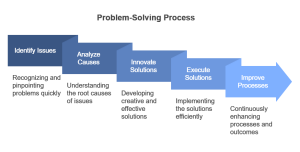
Image Courtesy: https://app.napkin.ai/
A problem solver can:
- Quickly identify issues and analyze underlying causes
- Innovate by finding artful solutions
- Execute solutions effectively
- Improve processes and results continuously
These skills play a key role in reducing operational inefficiencies and enhancing productivity, which is critical to any organization.
By that effect, when employees know how to solve problems, they are able to save the company both time and resources so that it can use the time to achieve strategic goals.
How to Develop Problem-Solving Abilities
Problem-solving skills are developed over a lifetime with deliberate practice and exposure to varied situations. Here are some ways to build problem-solving skills even better:
- Critical thinking exercises can be done through puzzles, games of logic, and brainstorming sessions. These will challenge reasoning ability.
- Try exposure to new situations that develop perspective—volunteer for projects that go beyond your comfort zone or participate in cross-functional teams.
- Learn from Other People: Observe the ways in which mature colleagues or even leaders solve problems. It can be learned through mentoring how to properly strategize in solving problems.
- Reflect and Learn: As soon as you have solved a problem, take time to learn what had worked and what did not. This is probably where you will fine-tune your approach to future issues.
Structuring Problem-Solving Examples in Your Resume
When you are drafting your resume, you should mention several examples of the demonstration of problem-solving abilities.
Here are some suggestions for writing in this kind of example:
- Use the STAR Method: Explain your engagement in solving problems with a clear Situation, Task, Action, and Result.
- Quantify Achievements: Use numbers to express the effects of your solutions, such as “processing time reduced by 30%”.
- Highlight Relevant Contexts: Select examples from other areas of your career where you have shown a diversity of problem-solving scenarios.
- Collaboration: Provide instances where collaborative problem-solving was essential in demonstrating that you can work with others.
With the above methods, you will be able to support your presentation of problem-solving abilities, hence making you an attractive candidate for any application.
Adjustability
Flexibility is another key soft skill highly valued by employers, particularly in the presence of fast technological development and continuously changing business environments. It means being flexible to yield well in an environment with constantly shifting dynamics.
Requirements for Adaptability in Present-Day Employees
The current labor force is constantly changing, whether it is because of technological development, market changes, or other modifications to the global economy. Versatile employees are beneficial to such an environment as they:
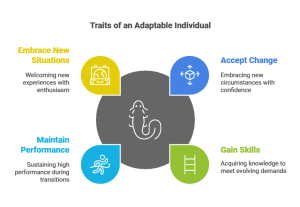
Image Courtesy: https://app.napkin.ai/
- Accept change with little fear
- Gain new skills in time to meet the needs of the organization
- Continue performing while the organization is changing
- Enter new situations with excitement
They are increasing their value to the organization through ease and an open-minded approach towards new changes. They help the business with easy transition and positive influence toward the long-term survival of the organization and its prosperous growth.
Experience of Adaptation
To communicate your adaptability effectively, it is necessary to reflect on your experiences and times when you managed change adeptly. The examples that indicate adaptability are:
- Participate in or lead projects that have needed to move fast and frequently pivot.
- Learn and apply new software or processes in a short period of time.
- Thriving in different team environments, adapting to cultural or work styles.
- Taking on new job roles or additional responsibilities that extend beyond your standard line of work
These examples, despite showing flexibility, indicate how one adjusts and exploits change, which is always attractive to a future employer.
Helpful Tips for a Good Illustration of Flexibility on Your Resume
To effectively communicate your ability on your resume, here are some tips for you:
Include different types of experiences with roles, industries, and settings where you had to be flexible.
Use the following as a guide to answer.
- Emphasize Learning Agility: If you learn new skills or tools in a very short amount of time, describe those.
- Detail Change Management: If you have managed or facilitated change, detail your leadership during transition periods.
- Use Positive Terms: Select terms that carry a positive undertone associated with change, like “embracing challenge,” “adapted quickly,” or “thriving in new environments.”
By putting such flexibility in a resume, you are showing your capability to succeed with the changing tides of modern changing workspaces, thus becoming an effective and resourceful professional.
Emphasizing soft skills such as problem-solving and adaptability in your CV not only highlights your competencies but also directly matches with the desired qualities by employers.
With the change in work environments continuing, clearly exhibiting these soft skills would significantly augment your professional journey by facilitating growth and career development.
Understanding Emotional Intelligence
Emotion quotient, or EI, stands for emotional intelligence, referring to the ability to realize, understand, and manage our own emotions, keeping in mind and adjusting to other people’s emotions at the same time.
It incorporates self-awareness, self-regulation, motivation, empathy, and social skills. Emotional intelligence is, basically, the sensitivity of a person. Relating to their emotions and to the feelings of others so that there can be an effective communication and interaction among individuals.
It is a resource that is indispensable in the workplace today, providing the opportunity for people to be able to work with completeness and keep relationships positive.
Implication of Emotional Intelligence in Career Development
In the world of career building, emotional intelligence often makes the difference between employees merely surviving and thriving. Emotional intelligence helps people to be able to work cohesively as a group, and resolves conflict easily toward creating an amicable work environment.
Such employees can adapt best to change and are good thinkers for strategic decision-making and policy-making.
Organizations are valuing EQ because it relates to increased leadership skills. High EQ leaders make people work for them by inspiring and motivating a team to create an atmosphere of productivity and innovation.
Therefore, having a good understanding of your emotional intelligence can promote your career through the following ways.
- Enhancing your communication skill
- Building a strong professional relationship
- Develop your ability to manage stress and conflict
- Enhance your leadership skills
- Enhance teamwork performance and cohesiveness
Just as emotional intelligence influences specific career activities, it contributes to organizational productivity in a bigger way by developing a sympathetic and sensitive culture that opens the door to energetic and long-lasting workplace practices.
Portraying Emotional Intelligence Skills in Your Resume
Showing emotional intelligence on your resume is all about demonstrating how these skills can benefit your professional abilities. It’s not just about having a high EQ or even knowing the facts, but about giving concrete examples and achievements while reporting it.
Here are some tips on the presentation of emotional intelligence:
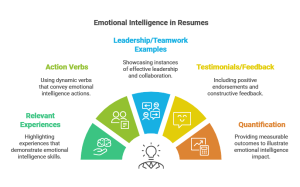
Image Courtesy: https://app.napkin.ai/
- Focus on experiences that involved the use of emotional intelligence: Talk about situations where your EQ was critical, like negotiating a conflict or working on a team to achieve something.
- Use action verbs that reflect emotional intelligence: Words such as “negotiated,” “facilitated,” “mediated,” and “coached” can indicate emotional intelligence in subtle ways.
- Examples of leadership or teamwork: Think about instances where you led a team or contributed to a successful group project. Use an example where emotional intelligence aided you in getting the job done.
- Add testimonials and feedback: Reviews or quotations from a manager or peers can strengthen your claim and the richness of your assertion.
- Quantification: If your emotional intelligence led to a better outcome for team performance or client satisfaction, quantify these results to further substantiate your effectiveness.
Thoughtfully illustrating emotional intelligence in the resume puts the candidate to present themselves in front of an interviewer as an all-rounded person.
Besides pointing out their technical capability, it makes light of interpersonal and intrapersonal skills, so they present a more desirable candidate before employers who hire, considering emotional intelligence in the teams they form.
Conclusion
Soft skills are more than just a nice addition in today’s competitive job market; they are essential parts that can make you a cut above the rest.
Such skills as communication, teamwork, emotional intelligence, problem-solving, and adaptability include those that will enhance not only your CV but also showcase your readiness for various challenges in your career.
Remember that such skills open new doors and give stable ground for long-term career development. Invest your efforts in honing these abilities, and watch them transform your professional journey.